Signs of Water Damage
One of the most obvious signs is condensation or fogging beneath the crystal. However, moisture can also be present without visible condensation.
Other warning signs include:
- The watch running fast or slow
- Complete loss of power
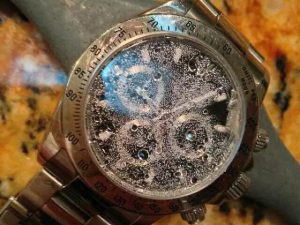
- Rust or corrosion on visible components
- Discolouration of the dial or hands
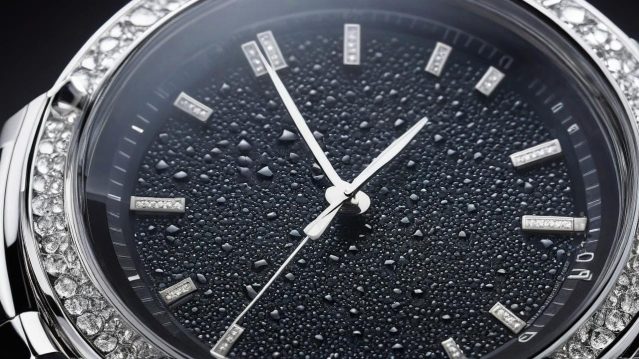
- Water droplets under the crystal
- Reduced power reserve in mechanical watches
If any of these symptoms are present, it is important to stop wearing the watch and seek professional assessment as soon as possible.
Can Water Damage Be Repaired?
In many cases, yes.
Professional watchmakers can often restore a water-damaged watch if the issue is caught early. The repair process typically involves complete disassembly of the movement, cleaning of all components, replacement of damaged parts, lubrication, reassembly, and extensive testing.
However, the extent of the damage determines what can be saved.
Minor moisture intrusion may require little more than cleaning and replacement seals, while severe water ingress can result in corrosion of movement components, dial damage, and the need for significant replacement parts.
The sooner a watch is examined, the better the chances of a successful repair.
Why Time Is Critical
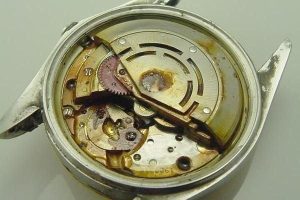
Corrosion can begin within hours of water (especially salt water!) entering a watch.
Moisture attacks steel components, lubricants become contaminated, and delicate movement parts can quickly deteriorate. In severe cases, permanent damage to the dial, hands, and movement may occur.
Delaying inspection often increases repair costs and reduces the likelihood of preserving original components.
Preventing Water Damage
The best protection against water damage is regular maintenance and pressure testing.
We recommend:
- Having water-resistant watches pressure tested annually
- Replacing worn seals during servicing
- Ensuring crowns are fully secured before exposure to water
- Avoiding steam and extreme temperature changes
- Having any condensation investigated immediately
Regular maintenance helps ensure your watch continues to meet manufacturer standards and remains protected during everyday wear.
The Importance of Pressure Testing
Many watch owners assume their watch remains water resistant indefinitely. Unfortunately, this is not the case.
Seals naturally age and degrade over time. Professional pressure testing verifies whether your watch can still withstand the conditions it was designed for and helps identify potential issues before water ingress occurs.
For dive watches, sports watches, and watches regularly exposed to water, routine pressure testing is particularly important.
Trust the Experts
At Michlmayr, our experienced watchmakers regularly assess and repair watches affected by water ingress. Using specialist equipment and manufacturer-approved procedures, we can determine the extent of any damage and advise on the most appropriate course of action.
If you notice condensation, moisture, or suspect your watch has been exposed to water, we recommend arranging an inspection as soon as possible. Prompt action can make the difference between a straightforward repair and extensive restoration work.
Don’t ignore the warning signs—early intervention is often the key to saving your watch.
Simply contact our team for more details. Call 01603 403687 or pop an email to admin@michlmayr.com.